Crow Princess, Page 43
PAGE 43 — Crows: the Bad Boys of Birding (continued)
Crows mate for life, although adultery is not unknown. Paired male and female crows share in the incubation of four to six eggs, which hatch in eighteen days. Both parents feed and care for the young, with help from previous year's youngsters. These "helpers" assist in the raising of new nestlings by bringing them food and guarding the nest. Youngsters first fly when they are about one month old, but often stay with their parents for up to three years. Nestlings may also benefit from the care of other non-breeding crows around the nest. This cooperative breeding approach distinguishes the crow from most birds, and is believed to be a sort of apprenticing of youngsters learning how to be parents. Or, perhaps, they are freeloading, bumming food off productive parents and doing just enough chores to keep from getting kicked out. Or it may be that in really lean years, the helpers make a crucial difference in survival. The truth is probably all three.
Crows have a big fan club as well as well as a large number of critics. Admired for their intelligence and tenacity, they also have a reputation for destroying gardens, farm crops and the nests of other birds. Their diet consists of insects, carrion, small rodents, bird eggs, nestlings, seeds, fruit, and nuts. Crows eat young nestlings and eggs for the same reason that robins snap up worms; all birds have increased energy requirements during the breeding season, and crows are no exception. Crows often cache food in trees and in the ground and are known to retrieve caches up to several months later. They've been seen dropping walnuts and mollusks from heights onto rocks to break them open; and have been observed stealing food from hawks and owls they have mobbed from their territory.
Crows chase hawks and owls for the same reason that mockingbirds chase crows: to purge their territory of a potential predator. Crows especially hate Great Horned Owls, their main predator, and take particular delight in harassing these hapless raptors as they nap during the day, often calling in friends to participate in the chase. The few predators that crows, especially fledglings, might face (besides unfriendly humans) are raptors. Adult crows often participate in a behavior known as mobbing, in which they drive the threatening bird out by chasing it en masse. This may also be a means of demonstrating to young crows "this is what trouble looks like."
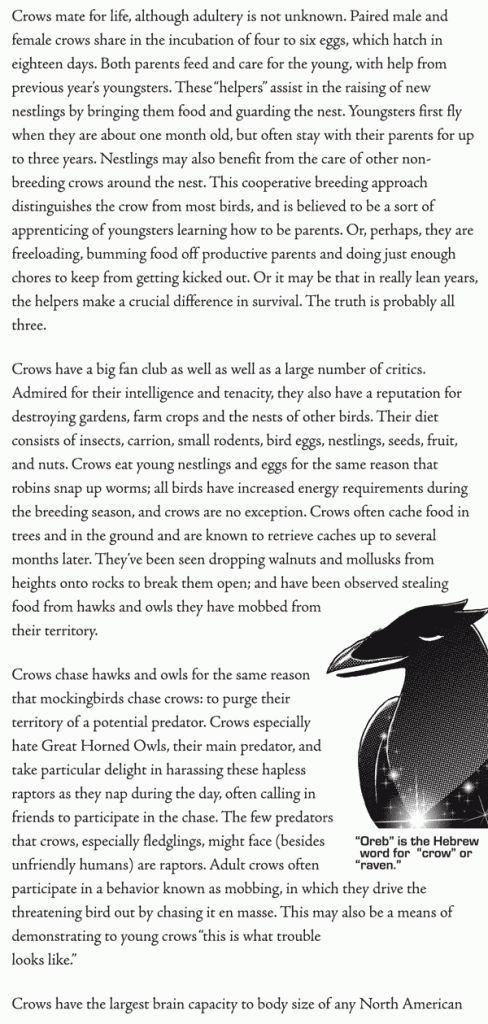
[Illustration of a crow with note: "Oreb" is the Hebrew word for "crow" or "raven."]
Crows have the largest brain capacity to body size of any North American...
I also used this as a chance to experiment even more with typography! See how those three lines about Oreb line up with the two lines in Garamond? SEE?